Years after the height of COVID, Taiwan still grapples with a nursing workforce shortage. At MacKay Memorial Hospital, a project to find solutions is underway. Teaming up with cloud gaming veteran-turned-AI expert Ubitus, MacKay is betting on AI-powered robots to preserve continuity and build resilience in one of the most high-pressure healthcare settings—the Emergency Room.
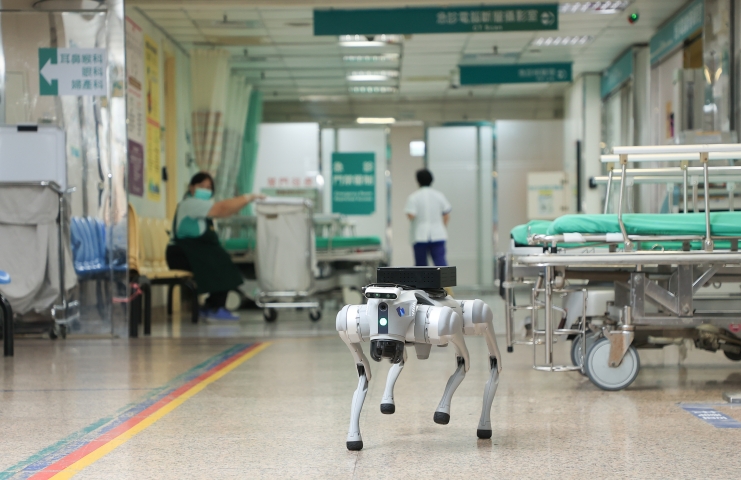
"Excuse us!" a nurse calls urgently as she guides a patient on a wheeled bed through the bustling hallway of Taipei MacKay Memorial Hospital's Emergency Room. Moments later, an infant arrives in an incubator and is promptly transferred to the pediatric unit. Patients in wheelchairs watch on, receiving support from Taiwanese volunteers or eldercare workers from ASEAN countries.
The scene illustrates the pressure that ER nurses face. And in this fast-paced, high-stakes environment, MacKay Hospital—now in its 145th year and serving patients at four locations across Taiwan—has partnered with Ubitus, a leading company in cloud streaming and AI solutions.
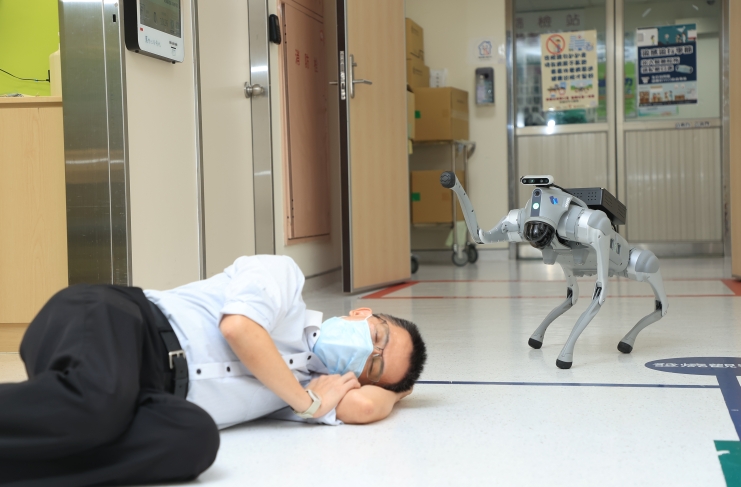
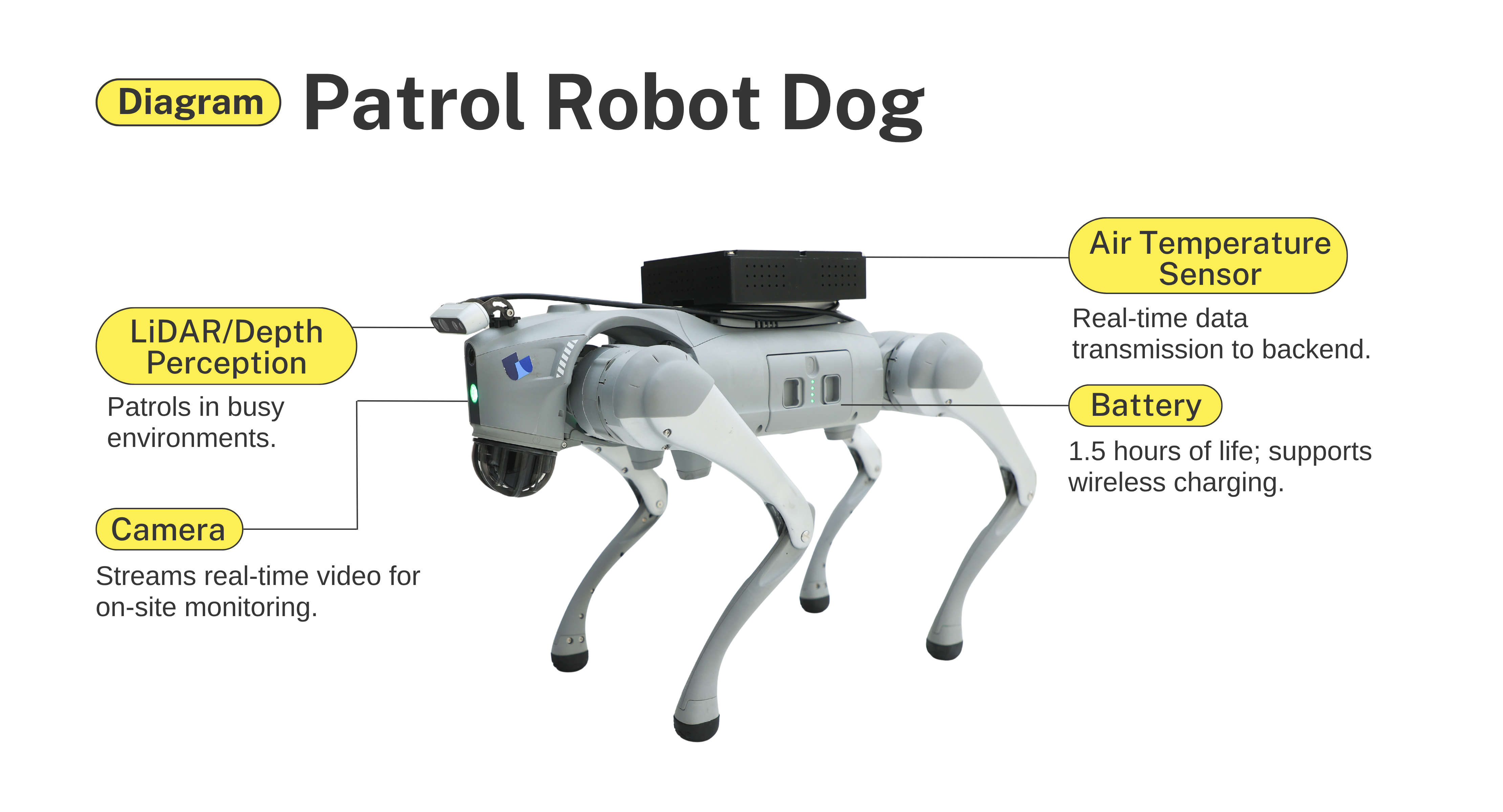
Robotic dog detects patient falls and vital signs in hospitals.
Together, they are launching a pilot project aimed at alleviating the burden on nurses by introducing AI robots as allies in patient care.
"During COVID, the demanding workload triggered career switches for many hospital nurses," explains Dr. Wen-Han Chang, President and Superintendent at MacKay. "If robots assist in the bulk of routine and repetitive work, like nighttime security patrols and environmental sanitation checks, the nurses will have more time to focus on patient care."
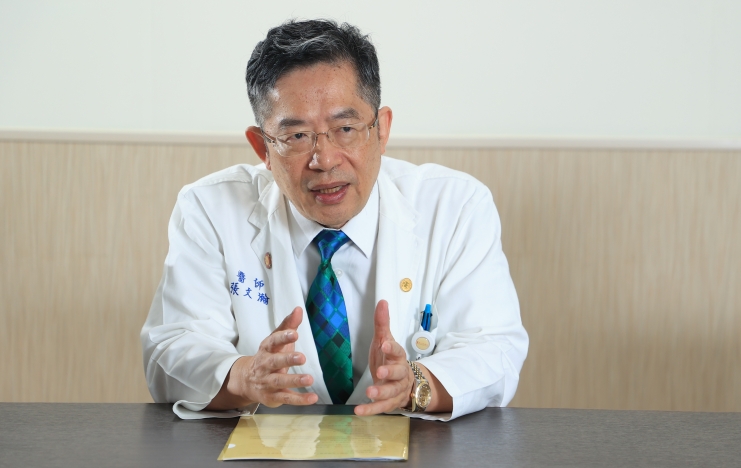
Wen-Han Chang, President and Superintendent at MacKay Memorial Hospital, says robots must integrate deeply with hospital culture and workflows to be effective.
Dr. Chang, an ER physician and an expert in intelligent medical technology, has made "smart healthcare" a strategic priority since taking on leadership roles at the hospital.
As it turns out, the staffing strain runs deeper.
"Even the transport personnel responsible for moving patients are impacted," says Dr. Shu-Tien Huang, an ER doctor at MacKay and a researcher in biomedical informatics. He is spearheading this project in collaboration with Ubitus and believes that robots will play an increasingly vital role in delivering cohesive patient care.
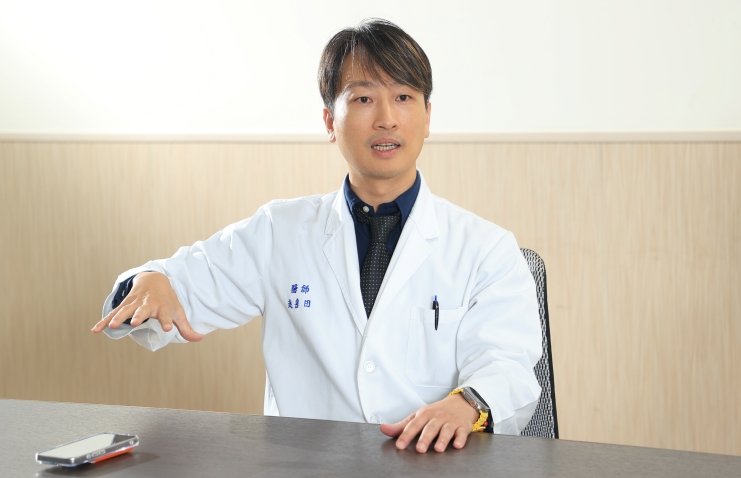
MacKay ER physician Shu-Tien Huang says medical robots must be continuously adapted to different clinical settings and requirements.
Integrating AI robotics into workflows
Tokyo- and Taipei-based Ubitus, founded in 2012, drives cloud streaming and software development for major players in the gaming and telecom industries. The company also works with government agencies and universities on cutting-edge AI services.
At MacKay, they are testing three types of robotic systems that utilize NVIDIA's GPU technology, including the B200 AI platform, as well as Meta's Llama 4 large language model.
At first glance, cloud gaming and emergency medicine appear worlds apart. But they share a common foundation: both thrive on advances in the human-machine interface.
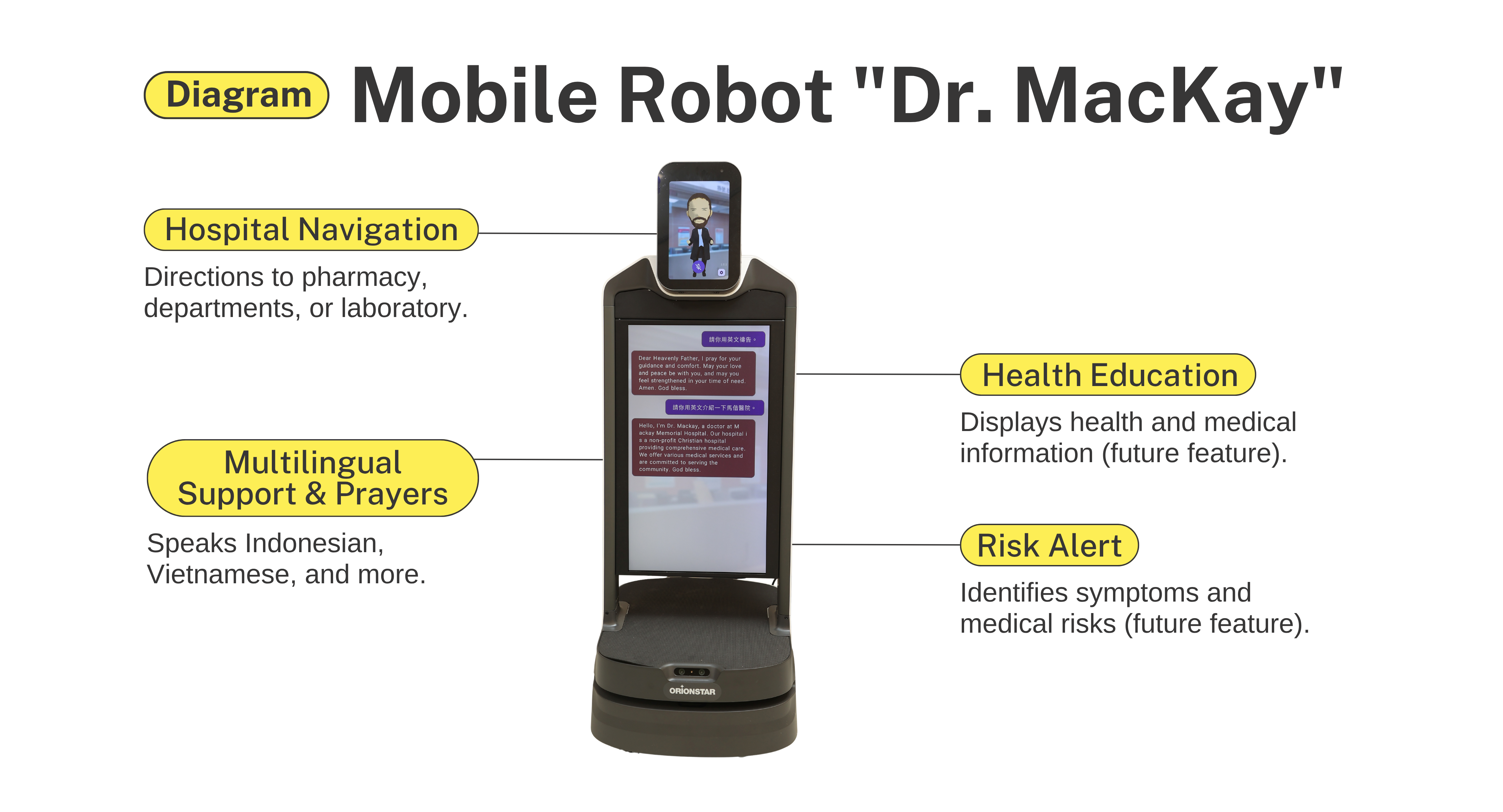
During a recent on-site demo, an Autonomous Mobile Robot spoke gently with a patient. Its avatar—modeled after Dr. George Leslie MacKay, the Canadian missionary who founded northern Taiwan’s first Western-style hospital in 1880—now serves as the symbolic face of the hospital’s AI transformation, channeling MacKay’s legacy.
The AMR guides patients through the ER floor to the registration desk and provides real-time multi-lingual translation support during consultations with doctors.
It primarily assists nurses in providing health education and can even support doctors or nurses in conducting consultations in the patient’s native language (Chinese, English, Japanese, Korean, and various Southeast Asian languages), thereby improving the efficiency of the medical process.
The demo also showcased how bio-inspired robotics can be used for security and surveillance purposes in a hospital.
A Quadruped Robot, also known as a robot dog, is equipped with an Nvidia Jetson AGX AI computer, a video camera, and multiple sensors. It detects water leaks, temperature fluctuations, and potentially harmful gases—risks that threaten the safety of both patients and medical staff.
In addition, the project team is training a Humanoid Robot to assist with specimen delivery, support patient mobility, and perform other logistics tasks typically managed by transport personnel.
Notifying an emergency
"A patient may suddenly feel unwell and collapse on the floor with a slow heart rate in the low 50s. A passing robot dog can detect the patient's condition and quickly send alerts to the nurses before a life-threatening In-hospital Cardiac Arrest (IHCA) occurs," says Dr. Huang.
"In another instance, when a gunshot-wound patient arrives at the ER and needs immediate chest compression, the robot dog should immediately recognize the urgency of the situation. It must move aside to clear the path for the patient and nurses, rather than obstructing their way."
He emphasizes that adequate computing power is now available within MacKay for robots to do live algorithm execution. However, further training is necessary for robots to respond effectively to a variety of scenarios with sophisticated situational awareness.
"It's on the way," he adds with optimism, suggesting a not-too-distant future filled with possibilities.
Exploring dynamic contexts
MacKay has indeed positioned itself at the forefront of AI-driven robotics in patient care.
"Unlike other hospitals that deploy robotics for just a single task, MacKay embraces multi-purpose functionality from the beginning and in the most challenging environment. This innovative approach sets them apart," says Wesley Kuo, Ubitus Founder & CEO.

Ubitus Founder & CEO Wesley Kuo emphasizes that identifying actual healthcare needs is essential for creating practical medical robots.
In fact, MacKay has been a pioneer in using data for patient care for many years, focusing on intelligent monitoring of patient conditions.
With data-driven risk factor analysis, doctors at MacKay can assess patients' conditions more accurately, predict their prognosis more reliably, and arrange interventions when needed, thereby reducing unnecessary hospital visits for patients.
In the same vein, Dr. Chang founded the Digital Medicine Department at MacKay, a dedicated unit designed for initiatives integrating applied medicine, imaging, and data analytics.
Instead of purchasing one-size-fits-all, off-the-shelf solutions from technology companies, he emphasizes the importance of first identifying the specific pain points faced by each department within the hospital. "Only innovations tailored to real clinical settings can prevent mismatches and waste."
Echoing the Superintendent's remarks, Dr. Huang points out that branch hospitals in the MacKay system have expressed interest in adopting robot assistants, though their expectations may differ. "The setup requirements vary between a hospital lobby and a surgical ward, and each location—whether it be Taipei, Tamsui, or Hsinchu—presents its own unique considerations."
Not a trend-chasing gimmick
Dr. Chang states that MacKay ultimately aims to be a fully smart hospital that champions predictive analytics and intelligent workflows.
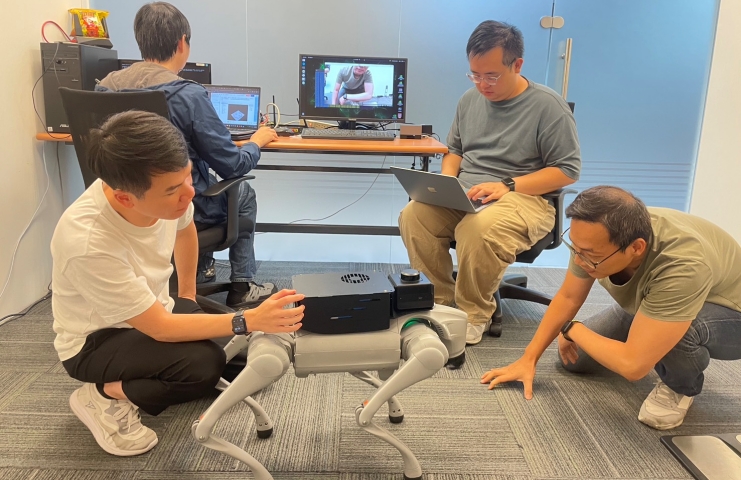
Ubitus team refines the robotic dog through iterative testing.
"We will find out robots' core values through their assigned tasks. By incorporating robots into existing workflows, we will see if real human-machine collaboration can be achieved. They are not just a gimmick."
Thanks to their extensive expertise in training and fine-tuning AI models on NVIDIA GPU architecture, the engineers at Ubitus are confident that robots trained on localized AI models and "digital twins" (a simulated model for a physical object) will navigate the hospital's complex spatial layouts with greater precision and minimal latency.
"Ubitus' strength lies in its ability to optimize algorithms for real-world scenarios," Kuo mentions that the accumulated know-how from AI fine-tuning can be rapidly replicated across other clinical environments. "The know-how is valuable in many areas, including emergency triage and complex cancer data analysis."
"We prioritize long-term value. Technology should be optimized for nurse satisfaction and better patient outcomes. " Superintendent Dr. Chang affirms. "Ten years from now, we may realize how far-reaching the changes brought by AI robotics have been."
(Producer: Sophie Y. Wu/Writer: Andrew Wang/Editor: Lihua Wang)
【Deep Read】Care Robots Are Coming: Who Pays, Who Profits?