Taiwan’s “Father of Robotics” Ren C. Lo says Taiwan has the talent and technology but needs a global path to turn prototypes into industries. The real challenge isn’t building smarter machines—it’s getting them out of the lab and into the world.
Robots today can autonomously navigate hallways, avoid obstacles, open doors, call elevators, and return to their charging stations when their tasks are done. These service robots are now increasingly common in hospitals, where they transport medical supplies and patrol facilities.
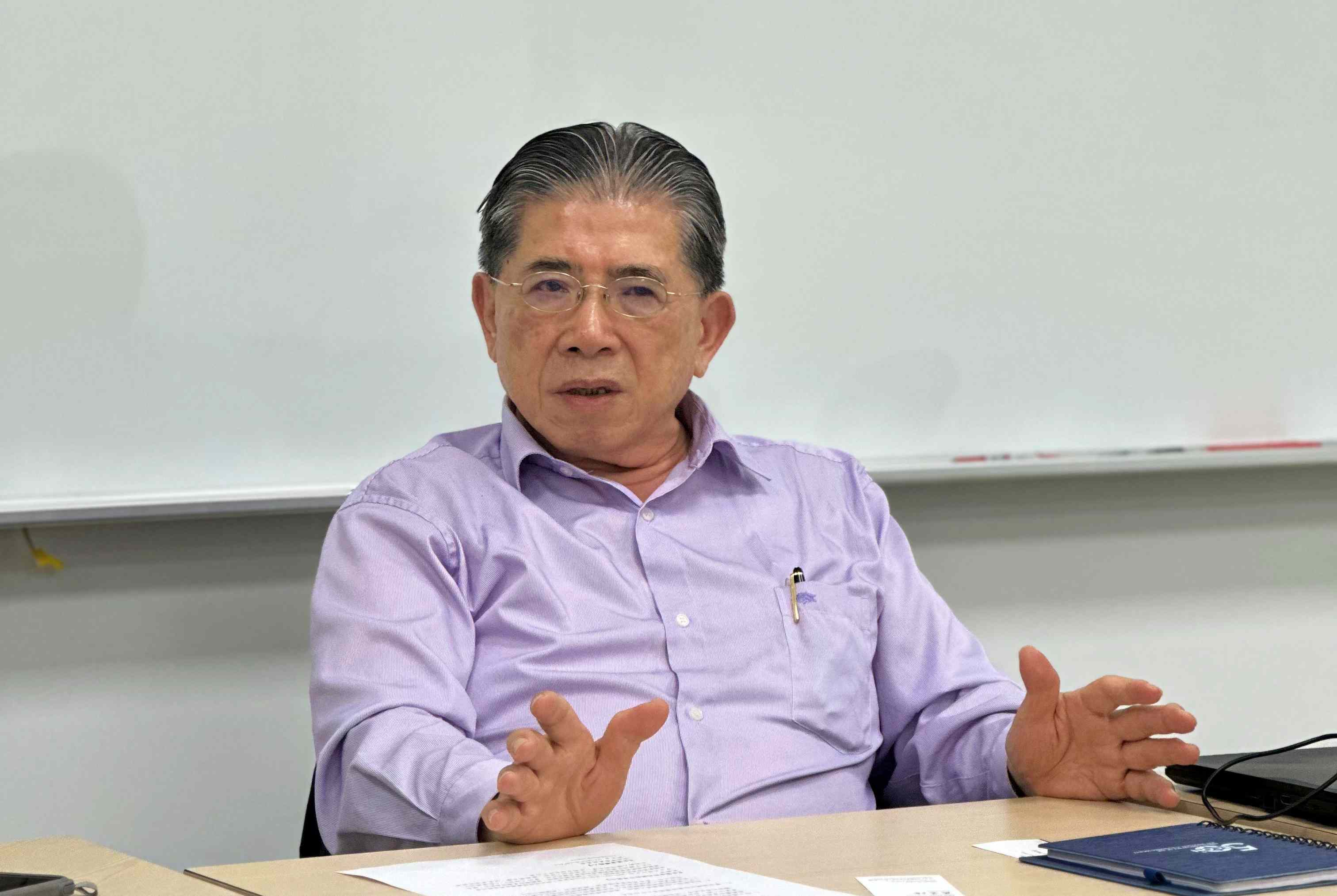
Professor Ren C. Lo, a distinguished professor in the Department of Electrical Engineering at National Taiwan University, has spent the past three decades pushing the boundaries of robotics. After earning his PhD from the Technical University of Berlin, he taught at the University of Illinois and North Carolina State University in the United States, where he joined automation research programs sponsored by the Pentagon and NASA. Lo also served for many years as a jury member and advisor for the IEEE International Conference on Intelligent Robots and Systems (IROS). Upon returning to Taiwan, he founded the International Center of Excellence in Intelligent Robots and Automation Research (ICEIRA) at NTU.
He shares a photo of a robot developed 26 years ago, when he was President of National Chung Cheng University, in collaboration with Shin Kong Security Co. It was Taiwan’s first fully automated service robot—capable of autonomous navigation, obstacle avoidance, and self-recharging. In the years since, Lo continued to prototype massage robots, seven-axis robotic arms, and more. Yet many of these innovations remained confined to laboratories, never making it to real-world deployment.
The Broken Link Between Academia and Industry
Known as the “Father of Robotics in Taiwan,” Lo now speaks of his achievements with thoughtful reflection. Taiwan, he says, does not lack innovation—what breaks down is the handoff in the commercialization relay race.
During his years in the United States, he was deeply influenced by Germany’s emphasis on practical education and the American focus on translating ideas into real applications. With roughly NT$300 million in research funding from the U.S. Department of Defense, NASA, and other agencies, he led teams in building robotic systems capable of performing autonomous tasks in unpredictable environments—from space station maintenance to extreme-field operations.
“That’s when I came to understand that the value of technology doesn’t lie in the paper—it lies in whether it works in the field,” he says. His teams built life-size simulation environments, integrating sensing, controls, and remote operations to ensure that research culminated in verified, mission-ready prototypes.
Globally, this process is measured by the Technology Readiness Level (TRL) scale—from TRL 1 (basic theory) to TRL 10 (real-world deployment). Most of Lo’s U.S. research reached TRL 6–7, where prototypes function reliably in realistic environments. But moving from there to commercialization requires manufacturing, service networks, and long-term maintenance—steps beyond the capacity of a university budget.
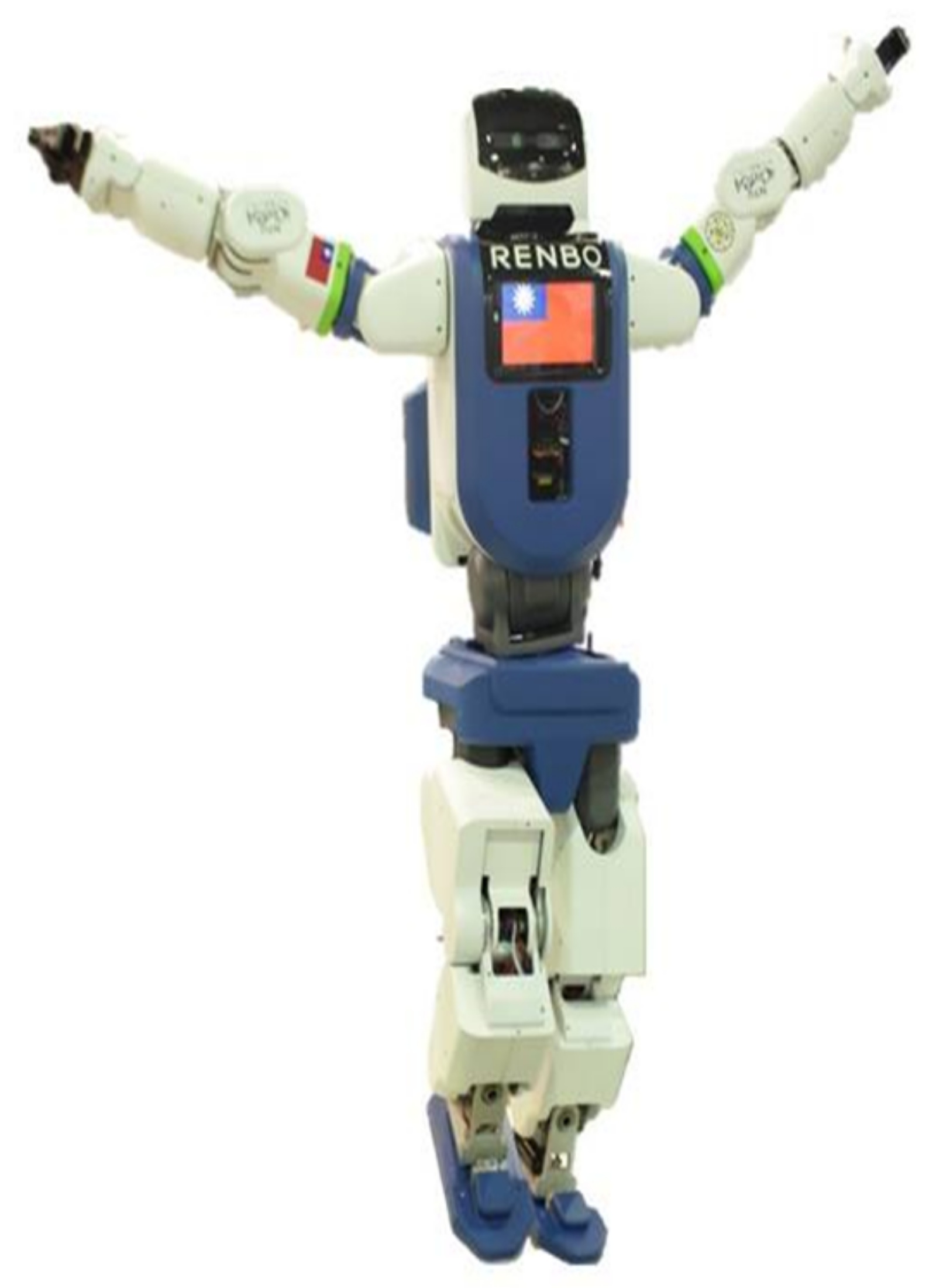 NTU-iCeiRA Humanoid Robot RENBO (2013) with 33 Degrees of Freedom.
Returning to Taiwan, he felt this gap even more sharply. Academic research often stays theoretical, while industry tends to fund only mature, low-risk technologies. This leaves innovation stranded between lab and market.
From Technical Showcase to Practical Solution
In recent years, robotics has gained momentum in healthcare. Major companies and startups alike are exploring how AI-powered robots can reshape labor and workflow.
Lo sees this as a positive trend, but he reminds his students, “Technology is only one-quarter of the solution. The other three quarters are process, stability, safety, and business model.”
To succeed, academia must understand real-world needs, and industry must be willing to adopt technology early—not only when perfection is guaranteed. Many of his former students, now senior leaders in global tech firms earning multimillion-dollar salaries, still recall his words:
“Building a robot is easy. Getting it to work in the field—and be trusted—is the challenge.”
As a former medical technology evaluator, Lo was impressed by a small startup that focused not on flashy algorithms but on solving a tangible pain point: the logistical movement of equipment inside hospitals.
“They weren’t talking about technology—they were solving the field’s real needs,” he says. Medical service robots must adapt to crowds, workflows, and hospital rhythms. Europe and the U.S. have long established “medical sandbox” systems, where new technologies are tested in simulated wards to refine safety, operations, and compliance before entering clinical use.
Stepping Beyond Taiwan
Now, as Taiwan’s medical robotics begin to move beyond research labs, global competition has already entered the ecosystem-building stage—integrating regulatory coordination, clinical validation, and manufacturing networks.
Taiwan’s high-quality healthcare system and flexible regulations create fertile ground for innovation—but without access to international markets, scaling will remain difficult. Lo argues that Taiwan must learn to translate its local successes into global value. Competing in Europe, the U.S., Japan, and Korea require not just good products, but participation in shared regulatory and industrial frameworks.
“We don’t lack innovation or talent. What we lack is a platform for the world to see us,” Lo says.
To truly enter the global stage, Taiwan must position itself as Asia’s hub for medical innovation—a place where global partners test, refine, and manufacture solutions.
The next era of robotics, he believes, will not be defined by who builds the most elegant prototype, but by who can earn trust in real environments, scale across borders, and demonstrate lasting value. Taiwan’s challenge is to take the leap—not just to invent, but to deploy; not just to showcase, but to collaborate; not just to compete, but to connect.
Only then will the long-built foundation of innovation accumulate into something larger—a place where technology leaves the lab, enters the world, and begins, quietly and steadily, to change it, allowing decades of innovation to become part of the world’s medical future.
(Producer: Sophie Y. Wu/Writer: Echo Chu/Adapted by Judy Lin/Editor: Lihua Wang)
【Deep Read】Care Robots Are Coming: Who Pays, Who Profits?