Thailand is repositioning healthcare as an economic driver, not just public service. Through its Medical Hub Plan and industrialization of traditional medicine, the government projects the herbal market will reach 90 billion baht by 2027. Beyond Bangkok, Khon Kaen Province is emerging as a wellness and innovation hub—offering Taiwanese smart healthcare firms a strategic entry point into Thailand's evolving medical landscape.
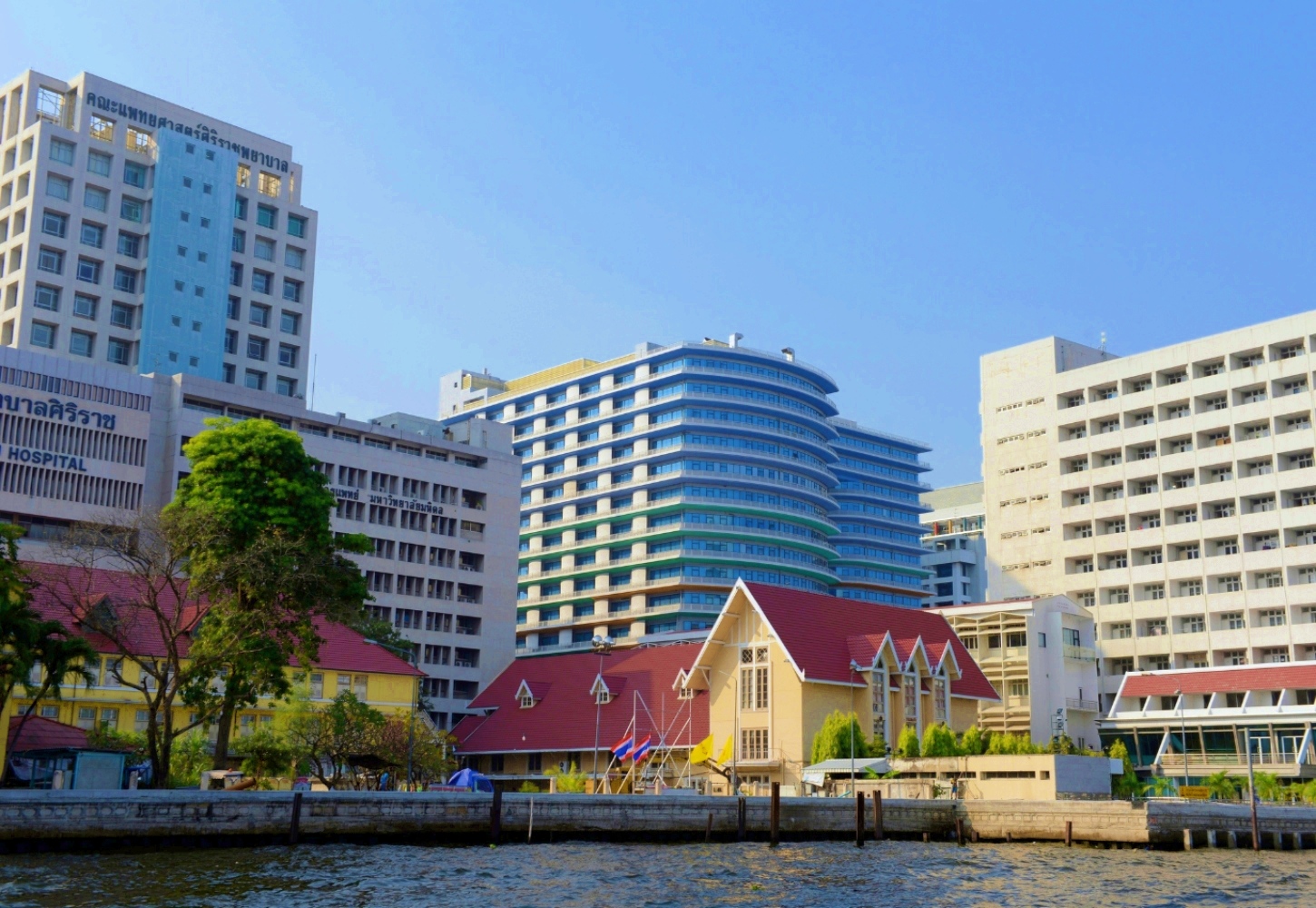
Thailand transforms healthcare into an economic engine. Siriraj Hospital, Bangkok—one of the nation's oldest and largest hospitals. (Image: Canva)
"Thailand's national development policies adjust very quickly in line with global trends, forming new strategic directions almost every three to five years," observes Dr. Nina Kao, CEO of Changhua Christian Hospital's Overseas Medical Mission.
From smart healthcare, precision medicine, remote care, and gene therapy to the recent rise of the "Medical Economy" and the "Industrialization of Thai Traditional Medicine," Thailand’s policies are continuously evolving, leading to a constant emergence of market opportunities. Kao points out that the Thai government acts not only as a regulator but also as a market driver, actively guiding the medical and health industries toward new directions through regulatory relaxation, investment incentives, and industrial support.
Policy Focus: The Medical Economy and Traditional Medicine
In recent years, the Thai government has used the "Medical Hub 10-Year Plan (2016–2025)" as its core foundation, extending it into two major policy pillars:
- The Bio-Circular-Green Economy Model (BCG).
- The Thai Traditional and Alternative Medicine Development Plan (2023–2027).
These policies redefine the role of healthcare in the national economy, elevating "healthcare" from a public service to an industrial engine driving national development.
This marks a crucial shift for Thailand, moving from the export of medical tourism services to the export of integrated medical industries. The Thai Ministry of Public Health and the Board of Investment (BOI) are actively encouraging international hospitals to establish R&D centers and rehabilitation bases in Thailand, while also relaxing restrictions on foreign equity ownership in special medical zones.
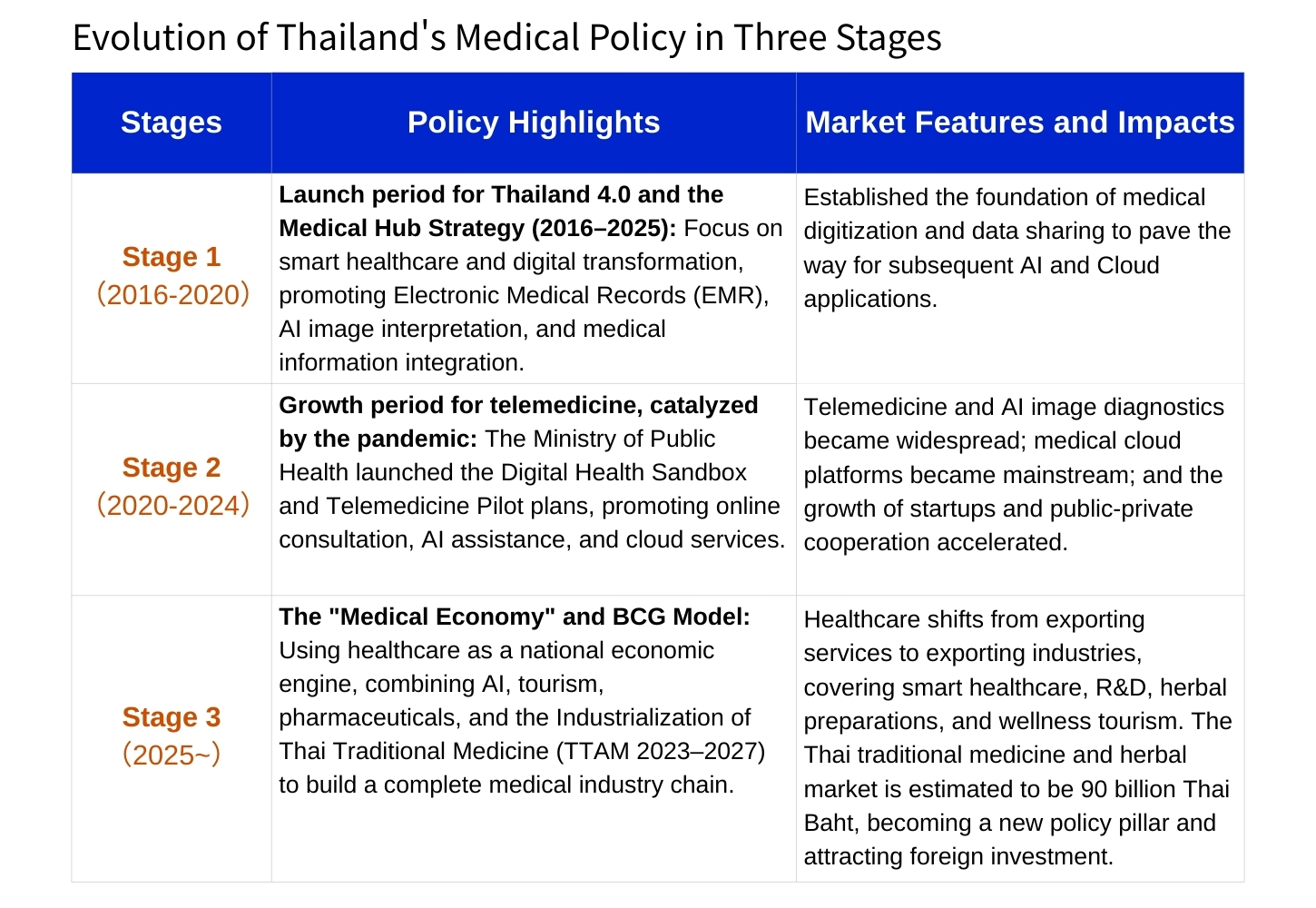
Consequently, by forming a new, 3-in-1 industry structure—"treatment, tourism, and innovation", Thailand connects diverse sectors such as medical device manufacturing, health management, long-term care services, and hospitality/tourism.
Simultaneously, the "Industrialization of Thai Traditional and Alternative Medicine (TTAM)" has become a policy focus in recent years. The government launched a five-year development plan in 2023, for the first time integrating traditional therapies and herbal preparations into the formal healthcare system. The core focus is on scientific validation, standardization, and digitalization, establishing clinical verification mechanisms and export regulations.
- The Thai Ministry of Public Health estimates that the population using herbal medicine will significantly increase from 1.48% to 15% by 2027.
- The utilization rate of traditional medicine is projected to reach 20%.
- The annual market value of herbal medicine is expected to reach up to 90 billion Thai Baht.
Today, "Thai Medicine" is no longer just a cultural symbol; it is an emerging industry combining cross-domain technologies such as herbal extraction, functional foods, AI, and wearable devices. It attracts international tourism and foreign investment through certification systems like the "Thainess Wellness Centers".
For Taiwanese organizations, combining smart MedTech with Thailand's local wellness culture and aligning with the policy direction presents an opportunity to find a new position and develop more promising international cooperation scenarios in this policy-driven wave.
Khon Kaen: The Next Blue Ocean in Thailand's Northeast
In addition to the policy-led new industrial directions, Thailand's regional planning is also redrawing the medical landscape. Khon Kaen Province, located in the Northeast, is increasingly seen as an extension hub of the "EEC Economic Corridor". Although the density of medical resources here is much lower than in Bangkok, it hosts multiple medical schools and research institutions, making it an important testing ground for Thailand's medical upgrading and local innovation. The BOI has also established the Northeast Investment and Economic Center locally, officially designating Khon Kaen as the new core for health and innovation.
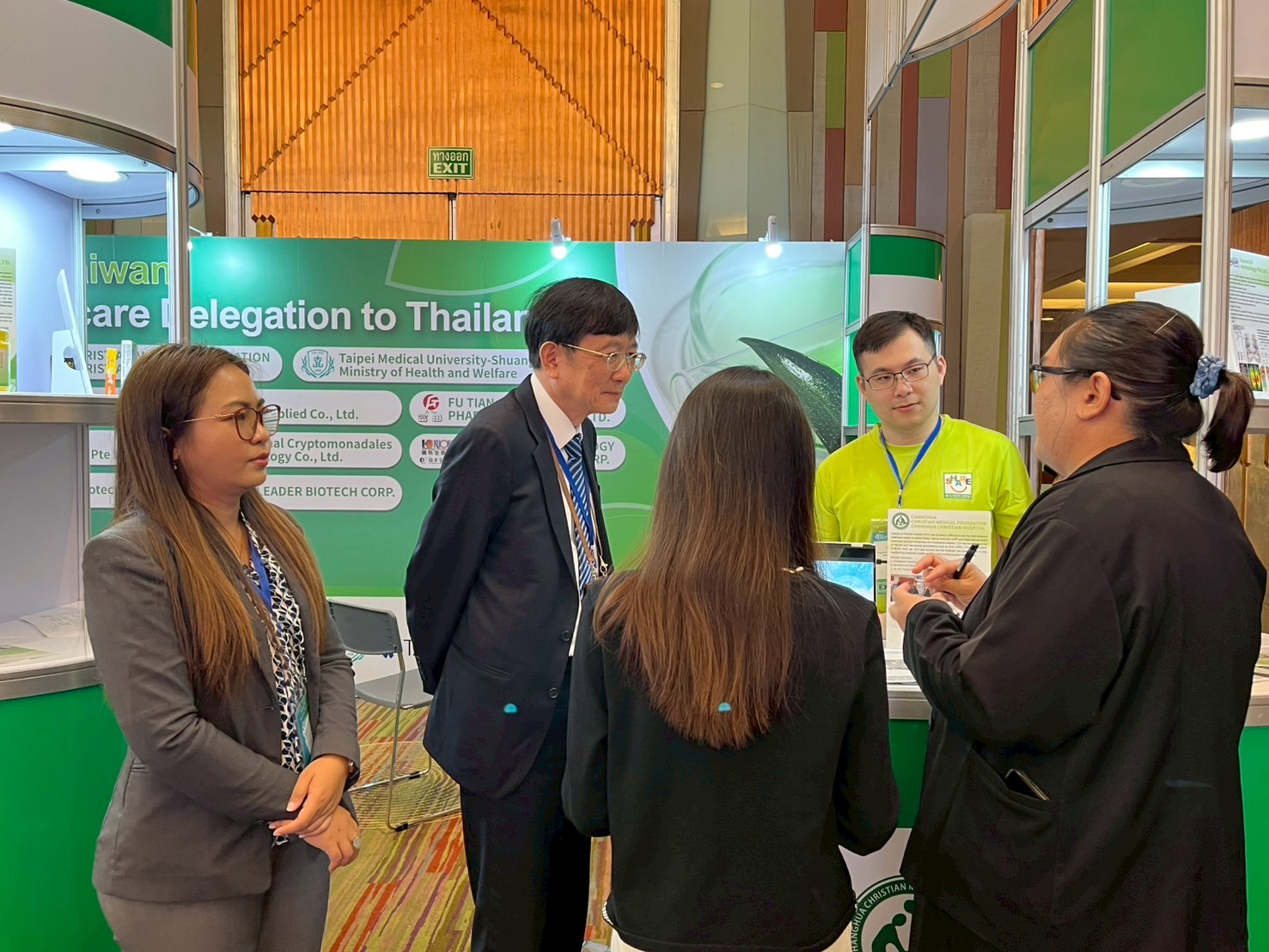
CCH team showcases AI healthcare innovations at Khon Kaen health summit, Thailand. (Source: CCH International Medical Service Center Facebook)
Dr. Kao points out that Thailand is promoting the development of Khon Kaen into a "Wellness & Medical Innovation Hub". Khon Kaen University recently established the "Wellness Service Centre & Medical Innovation District" and is collaborating with the Mekong Institute, positioning the entire Upper Northeast region as a core node for cross-border wellness, smart health, and medical R&D.
For Taiwanese teams, whether it is smart hospital systems, AI nursing and clinical decision support, rehabilitation equipment, or health monitoring platforms, Khon Kaen offers an ideal, "verifiable and reproducible" testing ground.
Only by grasping the policy rhythm, accurately understanding local needs, and leveraging the accumulated trust among hospitals can Taiwanese smart healthcare truly take the next step—transitioning from demonstration points to the real-life market application and establishing long-term development in Thailand.
(Producer: Sophie Y. Wu/Writer: Echo Chu/Adapted by Judy Lin/Editor: Lihua Wang)
【Deep Read】Targeting Thailand's $20bn Opportunity: "Healthcare-led" Industry Push