Written by: Institute for Biotechnology and Medicine Industry (IBMI)
Michael Tsai, former General Manager of AUO group and now Chairman of Darwin Precisions Corporation (DPC), is leading the company’s transformation amidst the intensifying global competition in the display panel industry, largely driven by China’s rise. In response, he has set his sights on high value-added sectors—particularly biomedical applications.
"Today’s competition is no longer about who has the better technology, but about economies of scale and cost efficiency," Tsai remarked. “You either scale big or cut prices drastically.” In such an industry dynamic, Taiwan must rethink its industrial structure. Otherwise, it will be dragged into a downward spiral of diminishing margins.
“What we need is to leverage our existing resources to identify sectors where Taiwan still has an edge and to create new opportunities for growth,” Tsai stated firmly. For him, this "new opportunity" lies in applying Taiwan’s optoelectronic expertise to the biomedical field—a sector characterized by high technological barriers and strong global demand.
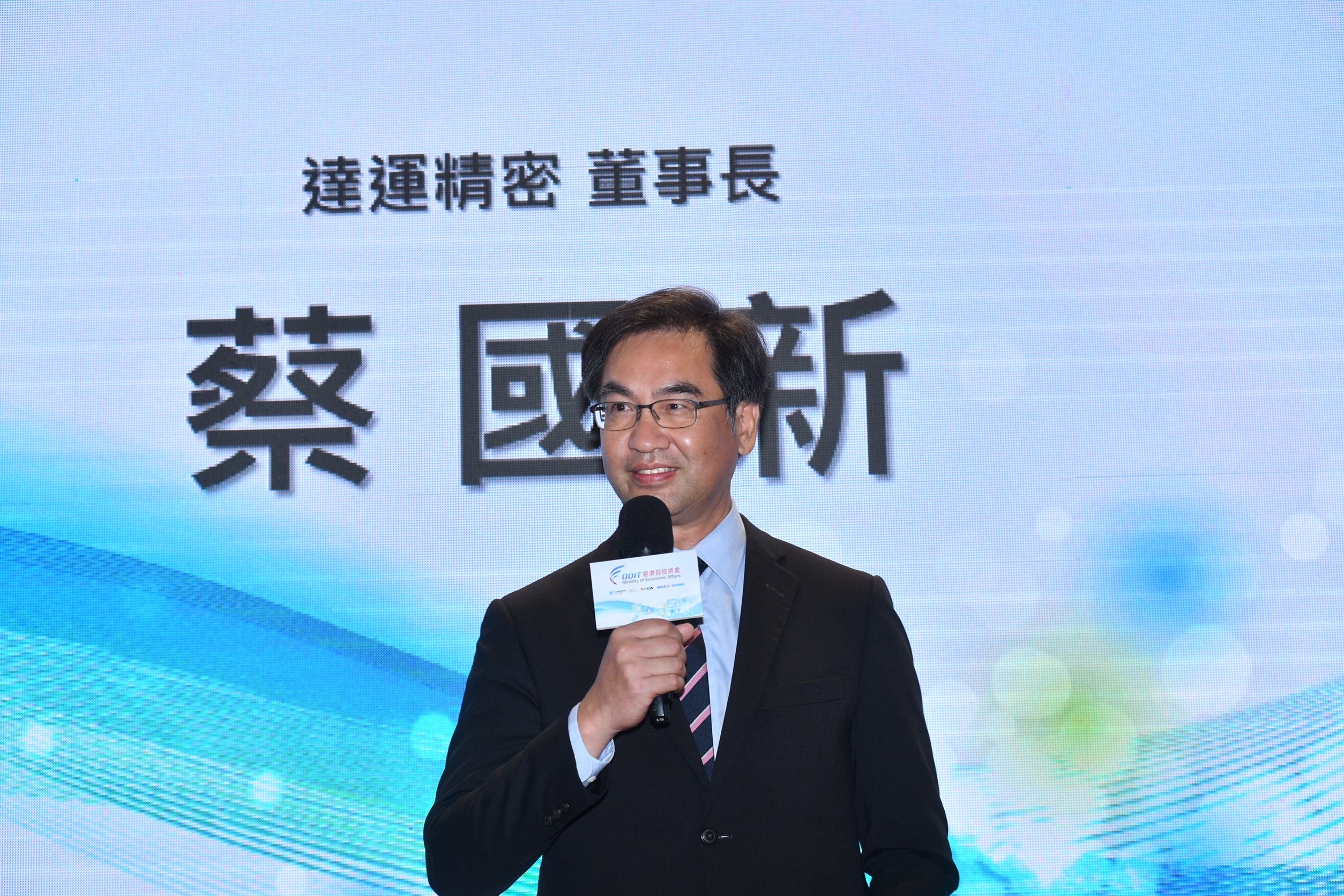
Chairman Michael Tsai leads Darwin Precisions’ new strategic direction, leveraging optoelectronic expertise to enter the biomedical sector. Image:Darwin
Leveraging Optoelectronics Expertise to Enter Precision Medicine
Darwin Precisions’ move into biomedicine is not a mere pivot, but the result of deep technological accumulation in optoelectronics. “We’re not blindly following trends—we’re building from our core capabilities and identifying where they can be extended,” said Tsai.
DPC has long been engaged in ultra-precision processing, mold design, photolithography, and double-sided metal etching for microstructures. One notable example includes the precision metal shadow masks for OLED displays in iPhones—ultra-thin structures just 10 to 20 microns thick, requiring exacting precision and materials control. Today, that craftsmanship is being repurposed for medical devices, forming the manufacturing foundation for high-performance biomedical components.
To support this new direction, DPC has established a dedicated biomedical facility in Taichung, designed to meet international standards such as GMP, ISO, and QMS. The goal: to become a globally recognized, FDA-compliant medical device supplier.
Micro Doctor Biomedical: High-Precision Microneedles Born from Optics-Grade Manufacturing
A major highlight of DPC’s biomedical transition is its wholly-owned subsidiary, Micro Doctor Biomedical Corporation, which is developing advanced microneedle systems. “Conventional DAB processes for microneedles don’t require such technical sophistication,” explained R&D Associate Vice President Yun-Pei Yang. “But by applying optics-grade manufacturing techniques, we achieve vastly superior precision, stability, and customization.”
These microneedles are made of proprietary, water-soluble materials that dissolve gradually in the skin interstitial fluid, releasing medication in a controlled manner and leaving no medical waste—a clear improvement over traditional syringe-based injections. Yang noted that their patented formulation combines biocompatibility with controllable drug release, key to its therapeutic potential.
Micro Doctor Biomedical also customizes microneedle patches by adjusting needle shape (e.g., conical or pyramidal), height, density, dissolution rate, and drug loading. While currently used in cosmetic and skincare applications, the technology is readily extendable to more critical uses such as vaccine delivery and chronic disease management.
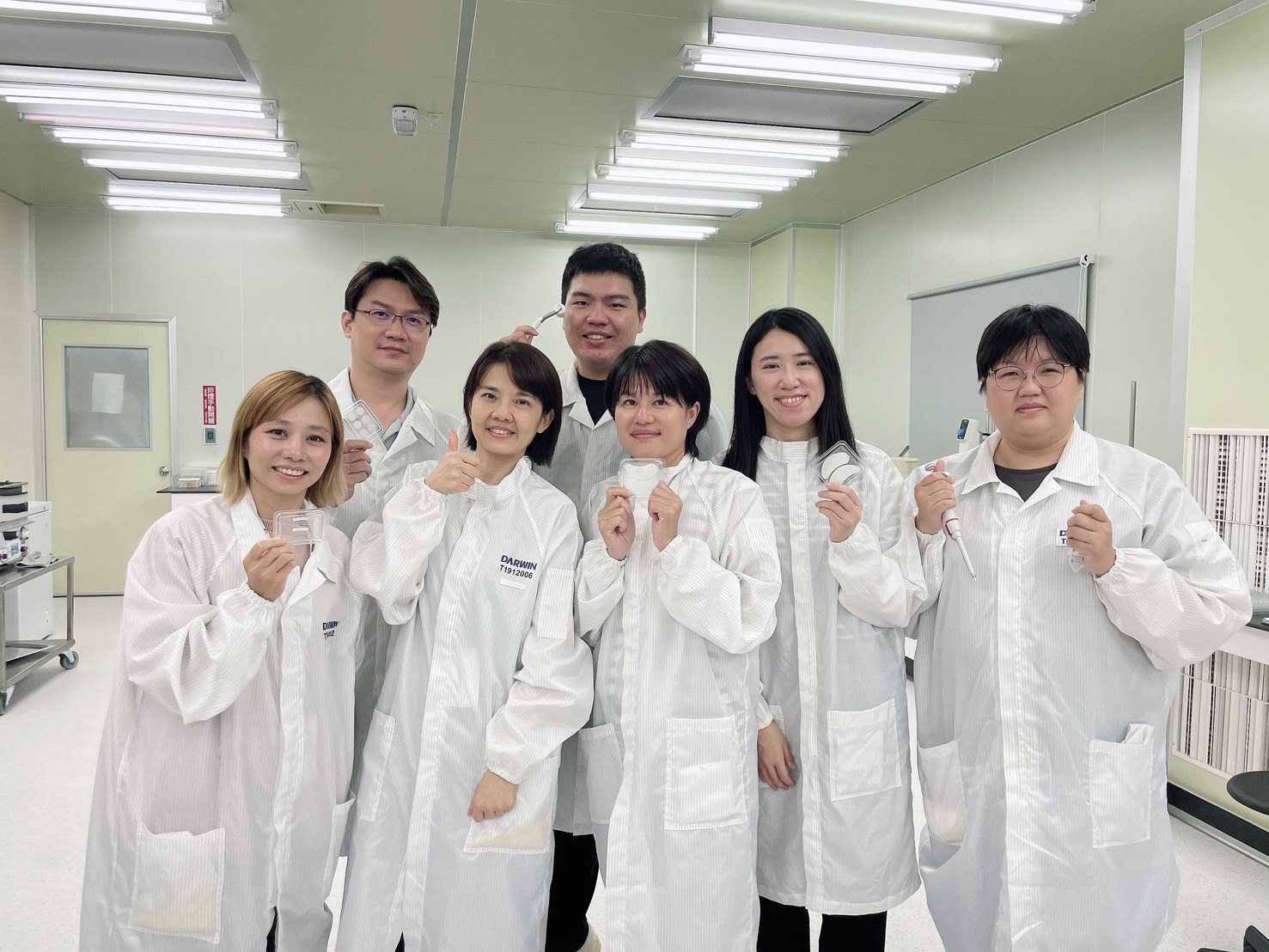
Dissolvable microneedle technology opens new applications in cosmetics and drug delivery. Image:Darwin
Next-Gen Biomedical Platform: Simulating Human Physiology on a Chip
In addition to microneedles, Micro Doctor is also developing organ-on-chip systems—integrated biochip platforms that serve as miniaturized labs for drug screening, pathogen detection, gene sequencing, and tissue modeling. Vice President Wilson Yang describes these chips as a "compressed version of the lab of the future."
“Our background in backlight modules and system integration—including precision injection molding and heterogeneous material bonding—makes us uniquely equipped for chip and platform manufacturing,” Yang said.
Biochip fabrication requires integration across disciplines: polymer science, microstructures, optics, and microfluidics. High yield and precision are essential, and DPC’s optoelectronic heritage provides a strong foundation.
One standout project is their lung-on-chip system, co-developed with strategic partners. By recreating a highly biomimetic lung microenvironment—including 90% physiological fidelity in gas exchange—it enables detailed drug response monitoring and environmental simulation (e.g., PM2.5 exposure). “We can even simulate breathing rhythms and airflow changes,” said Yang, which dramatically shortens preclinical evaluation times for new drugs.
This platform is modular and adaptable to other organ models such as heart and liver. Combined with AI-driven analytics, it facilitates real-time data analysis and predictive pharmacology—accelerating the drug development cycle.

Darwin’s capabilities in precision injection molding and heterogeneous material integration are well-suited for biochip and system manufacturing. Image:Darwin
Taiwan’s Next Chapter: From OEM to Innovation Powerhouse
Tsai's "New Darwin Strategy" is more than a reaction to the downturn in optoelectronics—it represents a fundamental shift in both manufacturing logic and industrial vision.
“We can’t keep chasing low-cost production. We must build high-value technologies and products that can stay in Taiwan,” he asserted. To truly transform, Taiwan must evolve its world-class manufacturing capabilities into innovation-driven power, tightly linking R&D, production, and market application.
From OLED masks to dissolvable microneedles and hybrid-material biochips, Darwin Precisions is using its world-class optoelectronic engineering—as Tsai describes it, “using a sledgehammer to crack a nut”—to open a bold new path into the global biomedical market.