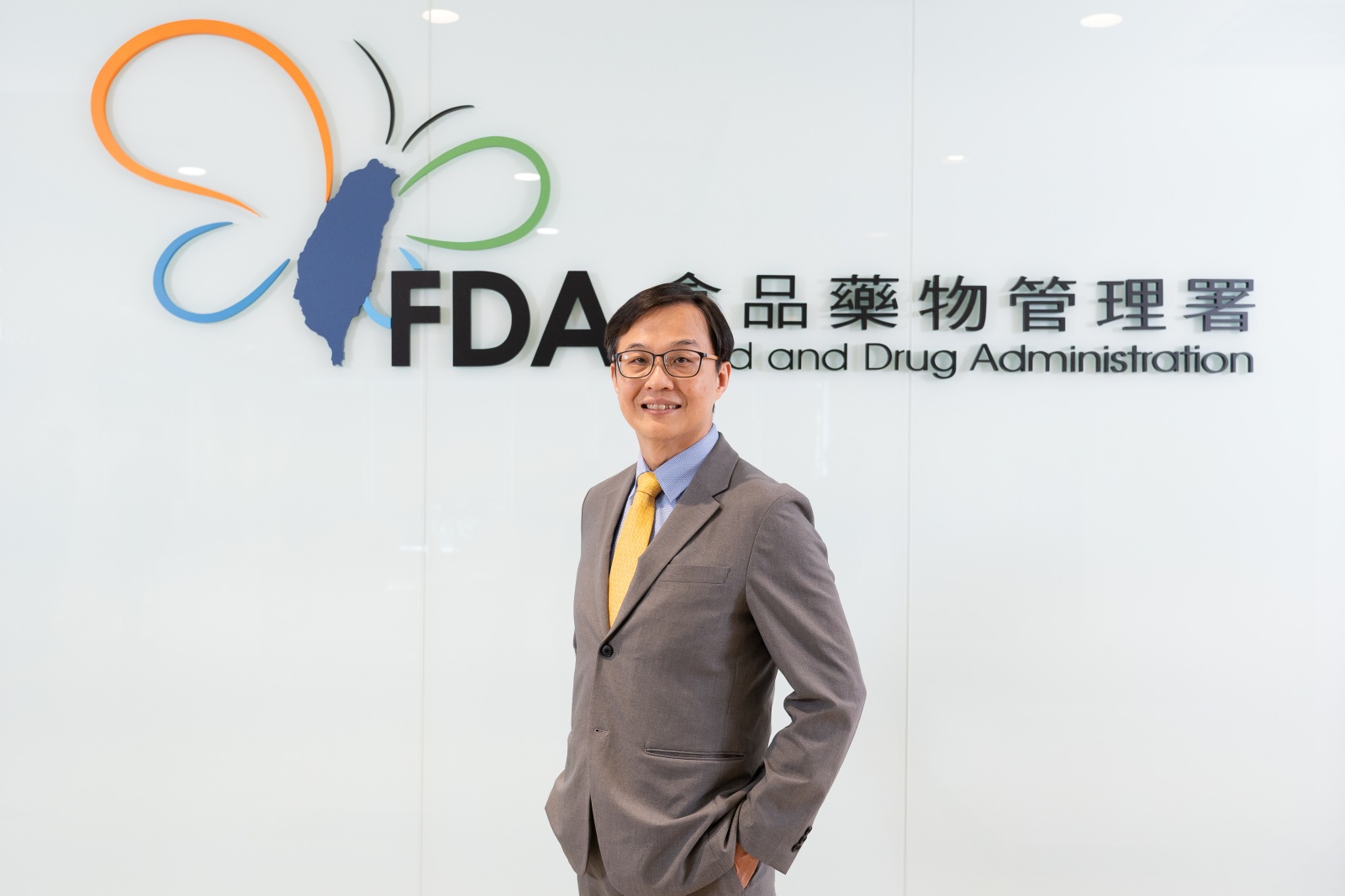
Taiwan Food and Drug Administration (TFDA) first director-general with a medical background, Chih-Kang Chiang (姜至剛), enters the interview room carrying a tablet—a modest tool for verifying data, though his formidable memory and meticulous preparation require little assistance. The smile on his face reflects ten months of effort transforming the agency into what he calls a "happiness enterprise." Dubbed the "triple-threat" director for his expertise spanning medicine, food safety, and pharmacotoxicology, Dr. Chiang outlines his vision for propelling Taiwan's smart medical devices from a nascent industry to a global contender.
International Strategy: Harmonization as a Gateway
In 2002, Taiwan launched the " Two Trillion and Twin Star Industries Development Plan, "targeting semiconductors alongside information and communications technology on one hand, and biotechnology on the other. Today, Taiwan ICT and semiconductor industries stand as critical pillars of the global supply chain—referred to as the nation's "sacred mountain of protection" (its economic pillars). By contrast, the biotech sector has yet to achieve comparable success. Taiwan smart medical devices account for only 0.8% of the global market. Dr. Chiang insists that expansion requires fresh thinking and innovative approaches.
Domestic medical device manufacturers have formidable research and development capabilities. Even Taiwan "Big Five" electronics conglomerates are making aggressive inroads into the sector, recognizing significant commercial opportunities. Dr. Chiang argues that the TFDA's regulatory framework must serve as the launchpad for these products' international expansion.
Medical devices inherently prioritize safety above all else when used on the human body. Throughout the approval process, the TFDA adheres to three fundamental principles: safety, effectiveness, and quality—concepts universally recognized across regulatory jurisdictions. Consequently, international regulatory harmonization becomes the paramount objective.
TFDA has secured affiliate membership in the International Medical Device Regulators Forum (IMDRF) and actively participates in the Artificial Intelligence/Machine Learning Medical Device Working Group. Additionally, the TFDA is a member of the Global Harmonization Working Party (GHWP), where it chairs two working groups, including the Pre-market Review of Medical Device Software. As medical devices worldwide increasingly incorporate AI and machine learning, Taiwan positions itself not as a follower but as a leader, playing a key role in international regulatory harmonization organizations and actively shaping regulations.
Three AI Centers: Accelerating Validation
Certain smart medical devices exhibit high versatility, promoting widespread international adoption. For instance, Taiwan technology leads globally in pathological image analysis, achieving exceptionally high accuracy. Additionally, diabetes diagnostic technology using ophthalmoscopy benefits from minimal ethnic variation in retinal vasculature, providing a natural advantage for these smart medical devices in expanding into overseas markets.
Applications that require consideration of ethnic variation necessitate additional validation and certification. The Ministry of Health and Welfare has established three national AI centers: the Center for Responsible AI in Healthcare, the Center for External AI Validation in Healthcare, and the Center for Clinical AI Impact Evaluation
For instance, the Center for External AI Validation in Healthcare enables smart medical devices to verify their feasibility within the center, obtaining certification after cross-level, cross-institutional data validation. Furthermore, to assess their impact on clinical care, the Center for Clinical AI Impact Evaluation carries out this mission by demonstrating the effectiveness of smart medical devices through real-world, cross-institutional validation within Taiwan's healthcare system.
When these smart medical devices are validated as usable by professional physicians and comply with TFDA regulations, they can be marketed and may even attract international buyers. Additionally, when products seek market approval abroad, international regulatory harmonization effectively reduces barriers between countries, facilitating the overseas expansion of Taiwan products.
Currently, international market competition is intense and follows the principle that "the strong get stronger. " Medical device companies aiming for overseas expansion can look to advanced high-tech leaders for new strategies. Software plays a crucial role in this process. TFDA emphasizes the concept of "Software as a Medical Device" (SaMD). When smart medical devices require software upgrades in the future, TFDA licensing provides the most direct and robust support system.
The goal is for smart medical devices certified in Taiwan to also obtain certification from the US FDA and the European Union. Several devices have already achieved US certification following TFDA guidance, demonstrating positive outcomes. Additionally, a shared language offers advantages. The global Chinese-speaking market represents a viable opportunity for Taiwan products, with ASEAN and South Asian markets being key areas of focus under the New Southbound Policy.
Domestic Strategy: Public-Private Collaboration
Examining the domestic landscape, Taiwan progression from the early development of technical guidelines, regulatory harmonization, and precision medicine to the current "Healthy Taiwan" policy resembles an evolution to version 4.0, with smart medical devices as a key priority. TFDA has established an AI/ML Medical Device Office that provides comprehensive regulatory guidance to industry stakeholders, actively promotes public-private collaboration, and encourages industry self-regulation to help achieve efficient certification and market entry.
Although the TFDA is a regulatory authority, it would like to dedicate its time and energy to providing guidance. The most common issue arises when manufacturers do not fully understand the review standards for different types of medical devices, leading to violations. These problems can be prevented through industry self-regulation, as manufacturers are best positioned to determine the classification of their own products. The TFDA is committed to outreach efforts, encouraging manufacturers to implement self-management from the outset and adhere to regulations. Additionally, the TFDA requests that relevant industry associations communicate this information to their members, promote mutual reminders among members, build consensus with regulatory authorities, and ensure that every manufacturer clearly understands and complies with the applicable regulations.
Furthermore, to ensure the safety and effectiveness of medical devices while facilitating expedited market entry, the TFDA requires "public-private collaboration" with third-party partners. For example, professional institutions are engaged to assist with product validation and to guide manufacturers in preparing the necessary submission documents. These institutions act as government collaborators, possessing a clear understanding of how medical devices are validated and certified. This empowers manufacturers and streamlines the process of obtaining product licenses—this is the critical mission of third-party institutions.
Maintaining transparent review processes and providing comprehensive guidance to ensure the completion of required milestones enable manufacturers to understand requirements precisely, thereby shortening certification timelines.
Reliance :Accelerating the Entry of High-Quality Foreign Products
For medical devices imported from abroad, the TFDA employs regulatory harmonization and reliance review to minimize redundant examinations during the domestic market approval process. This approach improves the TFDA's review efficiency, shortens review times, and allows for more effective resource utilization.
When foreign devices enter Taiwan market, user feedback on their applications inspires improvements. This positive feedback mechanism has helped Taiwan's smart medical device sector transition from its embryonic stage to rapid growth. Currently, the TFDA has approved 58 domestically produced smart medical devices for market entry.
This year's Bio Taiwan Committee (BTC) meeting emphasized the need for Taiwan to cultivate interdisciplinary talent in smart healthcare, as relying solely on graduates from a single discipline is insufficient for developing smart medical devices. Traditionally, Taiwan has focused on contract manufacturing industries. To compete internationally in the smart medical device sector, collaboration among industry leaders and cross-sector cooperation are essential. Today, the prestigious semiconductor industry is also venturing into healthcare, with a particular emphasis on AI-driven smart healthcare. With comprehensive deployment of talent, capital, regulatory frameworks, and international harmonization, it is believed that another leading industry will soon emerge.
Happy Company: The Happiness Enterprise Vision
Since assuming office in February, Dr. Chiang's primary internal priority has been fostering an organizational culture in which colleagues view themselves as part of a happiness-driven enterprise. This focus goes beyond physical infrastructure to include intangible elements, ensuring that colleagues feel both satisfaction and pride as members of the TFDA.
He has held individual conversations with each section chief to understand their aspirations and preferred development paths. Based on these discussions, selective personnel adjustments have been made to cultivate strong human capital and prevent talent from going unrecognized. When any government ministry requires the expertise of TFDA senior staff, secondment is possible, thereby expanding career development opportunities. He aspires for team members to surpass his own performance.
Additionally, flexible working hours have been piloted, allowing employees to adjust their schedules according to individual needs. Given the universal accountability in work attitudes, with no one refusing to address important matters, implementation has proceeded smoothly. Formal institutionalization is expected by the end of the year.
Secondly, Dr. Chiang aims to minimize stress among colleagues by having senior management absorb criticism instead of allowing it to reach frontline staff. Colleagues are required to act in accordance with the law, enduring significant pressures, including time constraints and regulatory demands. When society addresses TFDA related issues, he hopes for constructive policy guidance rather than mere criticism.
Third, he aspires to achieve service transparency. For example, e-commerce membership systems precisely display goods at various delivery stages. Similarly, when citizens and businesses submit applications to the TFDA, they want to track the progress of their requests. Dr. Chiang has shared this vision with colleagues—envisioning services where businesses clearly understand the status of their applications, reducing confusion and inquiries while easing the workload of staff.
A happiness-oriented enterprise means management considers everyone. Dr. Chiang regards internal colleagues as "elites among elites." On his 100th day in office, he expressed his gratitude. While the agency might operate without a director-general, it absolutely cannot function without every colleague.